You convert organic waste into renewable energy by harnessing anaerobic digestion, where microbes break down material without oxygen to produce methane-rich biogas. By maintaining ideal temperature, pH, and retention time, you maximize gas yield. The captured biogas powers combined heat and power systems, reducing greenhouse emissions and fossil fuel dependence. Safe storage and process monitoring guarantee efficiency and stability. Exploring further, you’ll discover how these plants integrate technology and sustainability for a cleaner energy future.
Key Takeaways
- Biogas plants convert organic waste into renewable energy through anaerobic digestion by microorganisms in oxygen-free, controlled conditions.
- The digestion process includes hydrolysis, acidogenesis, and methanogenesis to produce methane-rich biogas.
- Airtight digesters capture biogas from organic waste, which is stored safely in pressurized tanks or flexible holders.
- Biogas fuels combined heat and power (CHP) systems, generating electricity and heat while reducing fossil fuel use.
- Biogas plants reduce greenhouse gas emissions by capturing methane and substituting fossil fuels with sustainable energy.
What Is a Biogas Plant and How Does It Work?
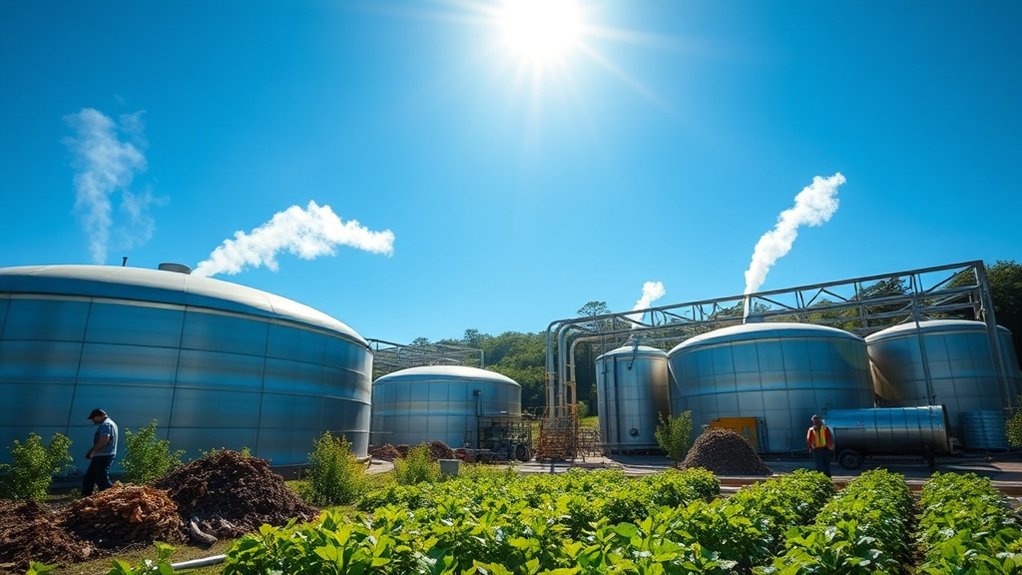
A biogas plant converts organic waste into renewable energy through anaerobic digestion, a process where microorganisms break down biodegradable material in the absence of oxygen. When you operate a biogas plant, you facilitate controlled conditions—temperature, pH, and retention time—to optimize microbial activity. The plant typically includes a digester tank where waste is sealed and processed, preventing oxygen infiltration. You’ll find systems to collect and store the biogas produced, usually a mix of methane and carbon dioxide, which you can then use as fuel. By managing feedstock input and monitoring system parameters, you can maximize energy output and minimize environmental impact. A biogas plant not only provides sustainable energy but also reduces waste volume and mitigates greenhouse gas emissions effectively. Additionally, data analytics can play a crucial role in optimizing the efficiency and productivity of biogas operations.
How Does Anaerobic Digestion Produce Biogas From Waste?
Understanding how anaerobic digestion transforms waste into biogas helps you optimize the process within a biogas plant. This biochemical process involves microorganisms breaking down organic material in an oxygen-free environment, producing biogas primarily composed of methane and carbon dioxide. You can enhance efficiency by controlling key factors such as temperature, pH, and retention time.
Key steps include:
- Hydrolysis: Complex organic polymers break down into simpler compounds.
- Acidogenesis: Fermentative bacteria convert these compounds into volatile fatty acids.
- Methanogenesis: Methanogenic archaea convert acids into methane-rich biogas.
Moreover, leveraging data analytics can significantly improve the management of biogas production by enabling better monitoring and optimization of the anaerobic digestion process.
What Types of Waste Feed a Biogas Plant?
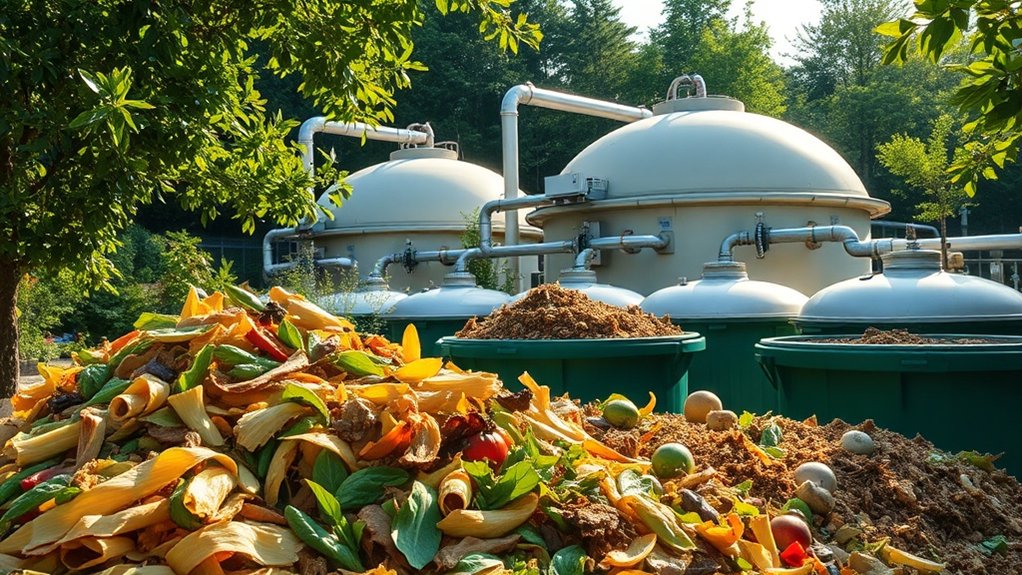
You can feed a biogas plant with various organic wastes, including household scraps, agricultural residues, and industrial byproducts. Each waste type offers different nutrient compositions and degradation rates, impacting biogas yield efficiency. Understanding these feedstock characteristics helps you optimize the digestion process for maximum energy recovery. Additionally, leveraging cost efficiency in waste management can enhance the overall sustainability and profitability of biogas operations.
Organic Household Waste
Several categories of organic household waste can efficiently feed a biogas plant, including food scraps, vegetable peels, coffee grounds, and expired dairy products. These materials are rich in biodegradable compounds that microbes break down to produce methane. When you separate and collect these wastes properly, you optimize biogas yield and reduce contamination risks.
Key organic household waste types include:
- Fruit and vegetable residues, which offer high moisture and carbohydrate content essential for microbial activity.
- Coffee grounds, providing nitrogen and enhancing microbial diversity within the digester.
- Dairy waste, rich in fats and proteins, boosting methane production but requiring balanced input to avoid process inhibition.
Agricultural Residue Sources
Agricultural residues serve as a vital feedstock for biogas plants, offering a sustainable way to convert crop by-products into energy. You’ll typically find materials like rice husks, wheat straw, corn stalks, sugarcane bagasse, and peanut shells feeding the digester. These lignocellulosic wastes have high cellulose content, which microbes break down anaerobically to produce biogas. Efficient preprocessing, such as chopping or milling, enhances microbial access and boosts gas yield. Moisture content and carbon-to-nitrogen (C/N) ratios vary among residues, so blending different types optimizes digestion balance. By tapping into these abundant, low-cost residues, you reduce reliance on dedicated energy crops, lower feedstock costs, and mitigate waste disposal challenges. Strategically sourcing and preparing agricultural residues guarantees your biogas plant runs efficiently while supporting circular resource use.
Industrial Organic Byproducts
A variety of industrial organic byproducts can serve as valuable feedstock for biogas plants, providing a consistent and nutrient-rich input stream. When you integrate these byproducts, you optimize biogas yield and enhance process stability. Key industrial wastes include:
- Food processing residues, rich in carbohydrates and fats, which boost methane production.
- Brewery and distillery waste, containing residual sugars and yeast, ideal for anaerobic digestion.
- Pulp and paper mill sludge, offering lignocellulosic material with high biodegradability after pretreatment.
How Is Biogas Collected and Stored Safely?
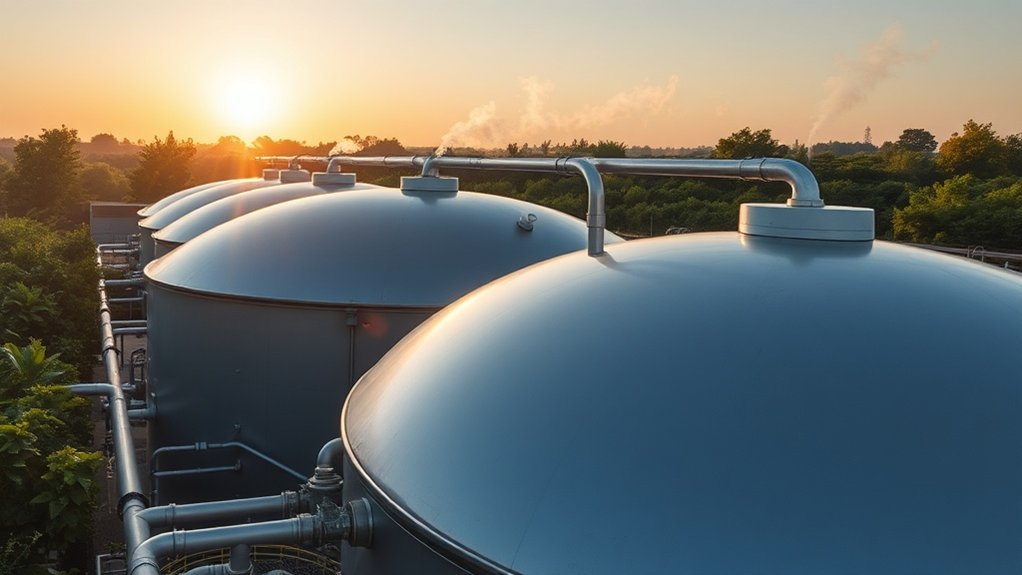
You’ll collect biogas using airtight digesters that capture the gas as microbes break down organic waste. To store it safely, you’ll rely on pressurized tanks or flexible gas holders designed to prevent leaks and withstand pressure changes. Understanding these methods guarantees efficient handling and minimizes safety risks in your biogas plant. Additionally, implementing logistics innovations can enhance the efficiency of biogas distribution systems, ensuring a sustainable energy supply.
Biogas Collection Methods
Although biogas production relies on anaerobic digestion, collecting and storing the gas safely requires carefully designed systems to prevent leaks and maintain pressure. You’ll typically use a sealed digester connected to a gas collection system that channels the biogas efficiently. The key is to guarantee airtight seals and controlled flow rates to optimize recovery and safety.
Common biogas collection methods include:
- Fixed-dome digesters: Gas accumulates in a permanent dome, creating pressure without mechanical parts.
- Floating-drum digesters: A movable gas holder rises with gas volume, allowing easy pressure regulation.
- Flexible membrane covers: Plastic or rubber membranes trap gas, adapting to volume changes and minimizing leaks.
Each method offers distinct advantages depending on scale, cost, and operational control, so select based on your plant’s specific needs.
Safe Storage Techniques
Since biogas is highly flammable and can contain impurities like hydrogen sulfide, you must implement robust storage techniques to guarantee safety and maintain gas quality. Using airtight, corrosion-resistant containers prevents leaks and contamination. Regular pressure monitoring and ventilation systems reduce explosion risks. Additionally, incorporating gas scrubbers helps remove harmful impurities before storage.
| Technique | Purpose | Key Feature |
|---|---|---|
| Airtight Tanks | Prevent gas leakage | Sealed, corrosion-proof |
| Pressure Relief Valves | Control internal pressure | Automatic release |
| Gas Scrubbers | Remove impurities | H2S and moisture removal |
| Ventilation Systems | Prevent gas accumulation | Continuous airflow |
| Monitoring Sensors | Detect leaks, pressure changes | Real-time alerts |
How Do Biogas Plants Generate Electricity and Heat?
When biogas is captured from organic waste, you can convert it directly into electricity and heat through combined heat and power (CHP) systems. These systems use biogas as fuel in an internal combustion engine or turbine, generating electricity for on-site use or grid distribution. Simultaneously, the waste heat from this process is recovered for heating purposes, improving overall energy efficiency. To optimize performance, focus on:
- Maintaining consistent biogas quality to guarantee stable engine operation
- Utilizing waste heat for digesters or facility heating to reduce external energy needs
- Implementing real-time monitoring systems for efficiency and early fault detection
- Conducting thorough market research to identify potential opportunities for expansion and optimization.
Why Does Biogas Production Help Reduce Greenhouse Gases?
Harnessing biogas for electricity and heat not only improves energy efficiency but also plays a significant role in mitigating greenhouse gas emissions. When organic waste decomposes anaerobically in landfills or open environments, it emits methane—a greenhouse gas with a global warming potential 25 times greater than CO₂. By capturing this methane through controlled digestion in a biogas plant, you prevent its direct release into the atmosphere. Additionally, substituting fossil fuels with biogas reduces carbon dioxide emissions associated with conventional energy sources. This dual effect—methane capture and fossil fuel displacement—makes biogas production a powerful tool for greenhouse gas reduction. Integrating biogas systems into waste management and energy production strategies is a practical, scalable solution to achieving climate targets and promoting sustainable energy practices. Furthermore, leveraging data analytics can optimize the efficiency and effectiveness of biogas operations, enhancing overall sustainability.
Key Components of a Biogas Plant
Although biogas plants vary in design, they all rely on a few critical components that work together to convert organic waste into usable energy. Understanding these components helps you enhance energy extraction and system efficiency. First, the digester is the airtight chamber where anaerobic digestion occurs, breaking down organic matter. Next, the gas holder stores the biogas produced, maintaining pressure for consistent energy supply. Finally, the inlet and outlet system manages feedstock input and digestate removal, ensuring continuous operation without contamination. Each component plays an essential role in maintaining ideal microbial activity and gas production rates. By integrating these elements effectively, you create a reliable process that transforms waste into renewable energy, reducing reliance on fossil fuels and advancing sustainability. This efficient operation mirrors the way streamlined processes enhance overall productivity in various sectors, including ecommerce.
Maintaining and Optimizing Biogas Plant Performance
Since efficient operation depends on maintaining ideal conditions, you need to monitor key parameters such as temperature, pH, and feedstock composition regularly. Keep the digester temperature within the mesophilic range (30–40°C) to optimize microbial activity. pH should stay neutral, between 6.8 and 7.4, to prevent acidification or inhibition. Analyze feedstock for carbon-to-nitrogen ratio, ensuring it remains balanced around 20–30:1 for steady biogas production. Regularly inspect and clean input and output systems to avoid blockages. Use sensors and automated controls to detect anomalies early and adjust operational parameters dynamically. Implement routine maintenance schedules for pumps and mixers to enhance process stability. By systematically addressing these factors, you’ll maximize gas yield, reduce downtime, and extend equipment lifespan, ensuring your biogas plant operates efficiently and sustainably. Additionally, consider utilizing inventory management tools to streamline operations and track resources effectively.
The Future of Biogas Plants in Sustainable Energy
Biogas technology is poised to play a critical role in the shift to sustainable energy systems. As you explore its future, you’ll see how advancements can enhance efficiency and integration with existing grids. You’ll benefit from innovations like improved microbial consortia and smart monitoring systems that optimize biogas yield and stability. Scaling up biogas plants will also enable you to reduce greenhouse gas emissions considerably.
Key developments to watch include:
- Integration with renewable energy storage solutions for grid stability
- Utilizing diverse feedstocks to boost resource efficiency
- Automation and AI-driven process controls to maximize output
- Mobile commerce strategies that can enhance the promotion of biogas solutions in digital marketplaces.
Frequently Asked Questions
What Are the Initial Costs of Setting up a Biogas Plant?
You’ll face initial costs including digester construction, feedstock preparation, and gas storage. Equipment, installation, and permits add up. However, investing smartly guarantees efficient biogas production and long-term savings, making it a viable sustainable energy solution.
How Long Does It Take to Build a Biogas Plant?
It typically takes you 3 to 6 months to build a biogas plant, depending on size and complexity. Proper planning, sourcing materials, and skilled labor can speed up the process while ensuring efficient, reliable operation.
Can Biogas Plants Operate in Cold Climates?
Yes, biogas plants can operate in cold climates if you insulate the digester, use heating systems, or employ psychrophilic bacteria to maintain microbial activity. You’ll improve efficiency by carefully managing temperature and substrate quality.
What Safety Hazards Are Associated With Biogas Plants?
You’ll face hazards like gas leaks, explosions, and fires due to methane’s flammability. You must monitor pressure, guarantee proper ventilation, and use gas detectors to prevent accidents and maintain safe, efficient biogas plant operations.
Are There Any Government Incentives for Biogas Plant Owners?
You’ll find government incentives like tax credits and grants acting as fuel to ignite your biogas plant’s growth. These programs reduce costs, encourage sustainable energy adoption, and make your investment more financially viable and rewarding.